
Biomedical Sensing and Systems Lab
Physics, engineering and AI for low-cost healthcare technology that reaches underserved communities.
An ISP-supported research lab within the Department of Biomedical Physics and Technology, University of Dhaka, working towards SDG 3: Good Health and Well-being.
Supported byInternational Science Programme (ISP), Uppsala University, Sweden
ISP Research Group BAN:04
and the Department of Biomedical Physics and Technology, University of Dhaka
Lab Leadership

Prof. Muhammad Abdul Kadir
Lab Leader (ISP Group Leader)
kadir@du.ac.bd

Prof. Khondkar Siddique-e-Rabbani
Deputy Leader
rabbani@du.ac.bd
About Research Highlights Methods & Facilities People Publications Impact Partners Join Us
About the Lab
The Biomedical Sensing and Systems Lab develops innovative, low-cost healthcare methods grounded in physics, engineering and AI, and supervises PhD, MPhil and MS thesis research.
Our work aligns with Sustainable Development Goal 3 (Good Health and Well-being): we aim for technological innovations that reach underserved populations in Bangladesh. The lab is supported by the International Science Programme (ISP), Uppsala University, Sweden (research group BAN:04), and by the Department of Biomedical Physics and Technology, University of Dhaka.
Research
A. Achievements and Successes of Past Research
BiBeat Ltd.
A spin-off company that delivers the outcomes of our research to people.
Dhaka University Telemedicine Programme
Running since 2015, the programme brings consultations by qualified doctors to remote villages through locally run telemedicine centres. The lab also trains new telemedicine entrepreneurs to run these centres.
B. Current Research Programmes
Bioelectrical Impedance
Home of the Focused Impedance Method (FIM), a Bangladeshi innovation. Current work: finite element modelling of the thorax to monitor lung fluid, impedance spectroscopy of tissue temperature, non-invasive temperature monitoring during hyperthermia, and higher-resolution Pigeon Hole Imaging.
AI in Healthcare
Machine learning and deep learning for diagnosis and clinical decision support: cardiovascular risk from retinal fundus images, ICU length-of-stay prediction, MRI-based disc herniation and stroke lesion analysis, radiomics, TinyML fetal ECG analysis, and real-time sign-language interpretation.
Pulsed Electromagnetic Fields
Fundamental studies of how PEMF parameters affect cells, combined with impedance measurements to track phase and cellular-level changes, and PEMF-based therapy for pain management.
Biomaterials
Chitosan-based sponges for rapid hemostasis and drug delivery, wound-healing hydrogels from biowaste, and sustainable composites for protective footwear in diabetic neuropathy.
Medical Devices & Diagnostics
Low-cost instruments designed and built in-house: sensory-threshold systems for early detection of peripheral neuropathy, nerve-conduction studies, portable ultrasound for telemedicine, and multimodal sensing.
Radiation Dosimetry
Photo-neutron dose from medical linear accelerators and the associated risk of secondary cancer, and characterisation of neutron sources.
Research Support
The International Science Programme (ISP), Uppsala University, Sweden, has supported several of our research activities since 2010. The department has also received short-term research funds from various government departments, international bodies and private groups.
Research Highlights
Monitoring Lung Fluid with Electrical Impedance
A CT-derived finite element model of the human thorax (Materialise Mimics, COMSOL Multiphysics) showed that tetrapolar transfer impedance falls linearly with lung fluid volume (R² = 0.997 left lung, 0.9998 right lung). Clinically relevant accumulations (≥300 mL) produce changes above 2 Ω, which points to a non-ionising method for continuous bedside monitoring.
Higher-Resolution Pigeon Hole Imaging
A new electrode-sweeping scheme collects more impedance measurements without reducing electrode spacing. Machine learning models then reconstruct high-resolution images; ridge regression gave the best results (pixel accuracy 0.968, Dice 0.84).
Non-Invasive Tissue Temperature Monitoring during Hyperthermia Therapy
In agar and chicken-tissue phantoms with a 12-electrode array, impedance showed a linear inverse relationship with temperature. Central-location errors were as low as 0.17% (2 cm depth, chicken tissue).
Cardiovascular Risk from Retinal Fundus Images
Multimodal deep learning that combines CNN fundus features with carotid intima-media thickness and clinical data reached AUC 0.90, better than fundus-only (0.78) and CIMT-only (0.83) models.
Predicting Outcomes in Critical Care
A hybrid pipeline (CatBoost plus the custom deep regression model INSightRNetLOS) trained on 10,732 ICU records predicts discharge outcome and length of stay, with SMOTE-based handling of class imbalance.
Biopolymer Sponges for Rapid Hemostasis
Two freeze-dried chitosan sponge systems loaded with doxycycline were compared. Both were cytocompatible (>95% Vero cell survival). The CS/PVA formulation clotted blood faster (blood clotting index 77.78% vs 97.69%; a lower index means faster clotting) and released the drug rapidly, while the CS/gelatin formulation gave sustained release.
Methods & Facilities
Computational
- Finite element modelling (COMSOL Multiphysics) from CT segmentation (Materialise Mimics)
- Deep learning for medical imaging: CNN backbones, segmentation and multimodal fusion
- Machine learning on clinical tabular data, radiomics and image reconstruction
- TinyML and embedded AI for low-cost point-of-care devices
- Molecular docking and molecular dynamics simulation
- High-performance simulation workstation
Experimental
- Multi-frequency and multichannel bioimpedance analysers (Maltron BIOSCAN 920-2, Sciospec ISX-5)
- PEMF bioreactor (designed and built in Bangladesh)
- 64-channel EEG and EMG (Nicolet), OpenBCI and Emotiv EPOC+ portable EEG
- Biopac student labs, spirometer, audiometer, portable ultrasound scanner
- 3D printer, CNC machine, Intel RealSense depth camera, radiation survey meter
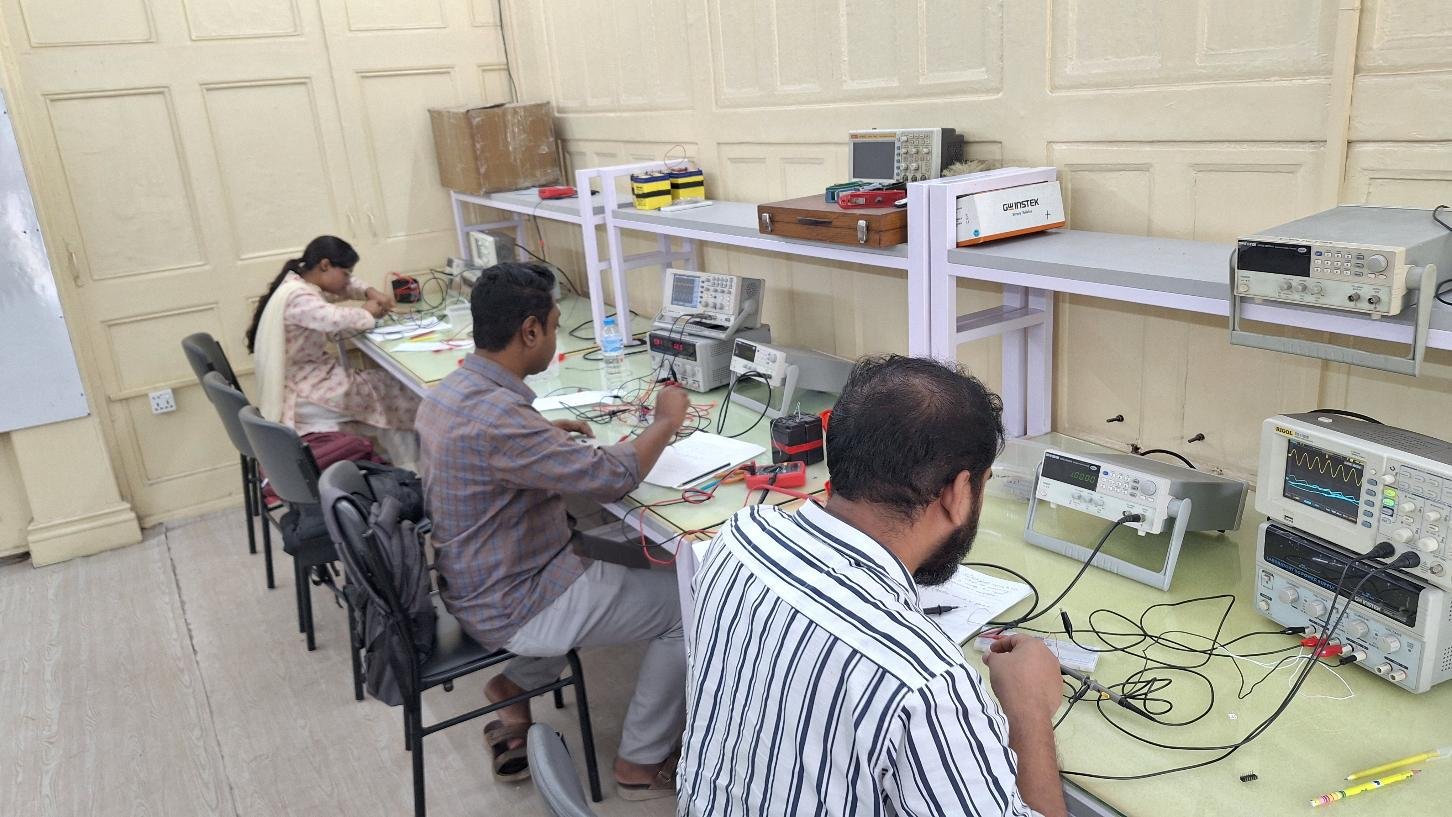
- Electronics workshop: oscilloscopes, signal generators and power supplies for in-house device development
People
Lab Leader (ISP Group Leader)
Prof. Muhammad Abdul Kadir
Professor, Department of Biomedical Physics and Technology. Leads bioimpedance, PEMF and AI-in-healthcare research. Member of the Medical Device Evaluation Committee of the Directorate General of Drug Administration (DGDA), Bangladesh. Recipient of the University of Dhaka Research Excellence Recognition 2025.
kadir@du.ac.bd
Deputy Leader
Prof. Khondkar Siddique-e-Rabbani
Honorary Professor and Founding Chairman of the Department of Biomedical Physics and Technology. Pioneer of the Focused Impedance Method (FIM) and of appropriate medical technology in Bangladesh. Member of the WHO Strategic and Technical Advisory Group for Medical Devices (STAG-MEDEV).
rabbani@du.ac.bd
Faculty
- Dr. K M Talha Nahiyan, Assistant Professor
- Dr. Mamun Rabbani, Assistant Professor
- Md. Sharjis Ibne Wadud, Assistant Professor
- Md. Ibrahim Al Imran, Assistant Professor
Research Staff
- Arpita Roy, Research Fellow
- Hridoy Chandra Barman, Graduate Research Assistant
Telemedicine Programme
- Md. Abu Yousuf, Coordinator
- Mariha Sultana, Assistant Field Coordinator
PhD & MPhil Researchers
- Afroza Naznin Akhee (PhD): low-cost portable ultrasound scanners for telemedicine
- Sabrina Sharmin (PhD): stretch-induced changes in nerve conduction velocity
- Shirin Akter (PhD): photo-neutron dose from medical linear accelerators
- Frijia Mortuza (PhD): lung fluid monitoring by impedance spectroscopy
- Lutfun Nahar (MPhil): AI-driven fetal anomaly detection from ultrasonography
- Md Amimul Ihsan (MPhil): AI-enabled assistive technology for hard-of-hearing people
Recent MS Graduates
- Jahanara Afrose Chumki: bioimpedance monitoring of tissue temperature during hyperthermia
- Md. Mahmudul Haque Milu: chitosan biopolymer sponges for hemostasis and drug delivery
- Mithun Bhowmick: TinyML hybrid CNN–BiLSTM–BiGRU model for fetal ECG analysis
- Md. Munna Jomaddar: temperature discrimination threshold system for peripheral neuropathy
- Kaniz Fatema Keya: deep learning for cardiovascular disease prediction from fundus images
- Arpita Roy: foot pressure sensory threshold system for diabetic peripheral neuropathy
- Afsana Parvin: cellulose–chitosan–tannic acid composites for protective shoe soles
- Ramija Hasan Nikita: radiomics-driven ML for primary tumour origin of brain metastases
- Omar Faruk: multimodal deep learning for prosthetic hand gesture control
Recent Publications
- Sayed MA, Rahman A, Nasif SM, Halder S, Hossain A, Ahmed H, Kadir MA. Automated lumbar intervertebral disc identification and herniation detection in MR images using cascade CNN architecture. Informatics in Medicine Unlocked 55, 101648 (2025). doi:10.1016/j.imu.2025.101648
- Roy T, Abdullah A, Mubasharah A, Zamee AI, Al Imran MI, Talukder MEK, Hosen MT, Kadir MA, Ali MB. Designing potential inhibitors against RET protein tyrosine kinase domain to fight sporadic medullary thyroid carcinoma: a virtual screening and molecular dynamics simulation-based approach. Journal of Carcinogenesis 24, 519–540 (2025). doi:10.64149/J.Carcinog.24.3.519-540
- Sharmin S, Karal MAS, Mahbub ZB, Rabbani KS. Effect of stretch on conduction in myelinated nerve due to wrist movement: an experimental and analytical study. PLOS ONE 20, e0333925 (2025). doi:10.1371/journal.pone.0333925
- Rahman A, Chowdhury MEH, Wadud MSI, Sarmun R, Mushtak A, Zoghoul SB, Al-Hashimi I. Deep learning-driven segmentation of ischemic stroke lesions using multi-channel MRI. Biomedical Signal Processing and Control 105, 107676 (2025). doi:10.1016/j.bspc.2025.107676
Selected Conference Presentations
- Reconstruction algorithm for improving resolution in bioelectrical impedance based Pigeon Hole Imaging. IUPESM World Congress on Medical Physics and Biomedical Engineering, Adelaide, Australia, Sep–Oct 2025.
- A deep learning pipeline for predicting length of stay and patient discharge outcomes in critical care units. IUPESM World Congress 2025, Adelaide, Australia.
- Multimodal sensing with TinyML integration for early detection of diabetic peripheral neuropathy. Future Healthcare and Economic Development (FHED-2025), National Cheng Kung University, Taiwan, Nov 2025.
- Secure remote patient monitoring in smart wards using blockchain and encryption techniques. 6th IEEE International Conference on Telecommunications and Photonics, BUET, Dhaka, Dec 2025.
- Bioelectrical frontiers in medicine: diagnostic and therapeutic, explored in Bangladesh (invited, K. S. Rabbani). ICAP 2025, SUST, Sylhet, Dec 2025.
- Six oral and poster presentations at the International Conference on Physics in Medicine (ICPM-2025), Dhaka, Oct 2025, on lung nodule detection in PET-CT, nerve conduction, neutron dosimetry, chitosan hydrogels, skin disease classification and carotid artery haemodynamics.
Lab members won best paper presentation awards at the Biophysical Society Networking Symposium.
Impact & Outreach
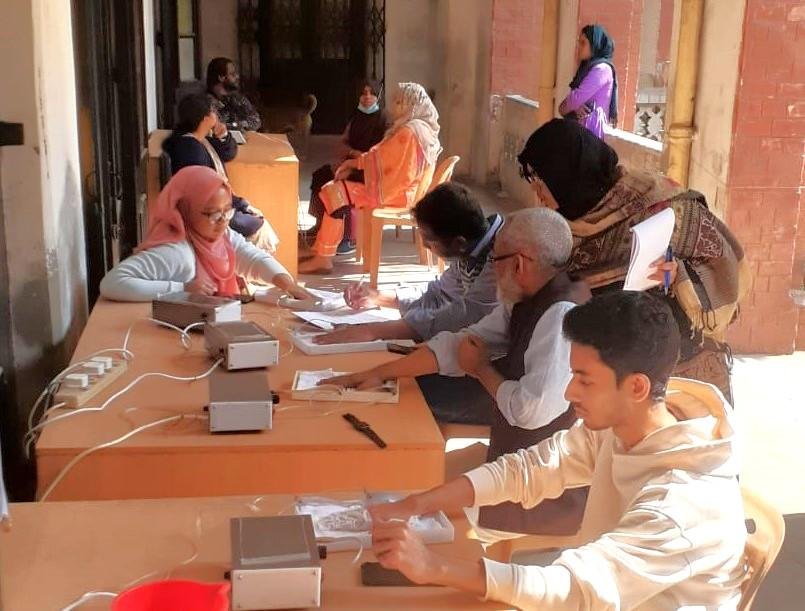
- Free health camps (with BiBeat Ltd.): PEMF and iontophoresis therapy for pain management, plus general consultations, for about 250 people.
- Health policy: Prof. Rabbani serves on the WHO STAG-MEDEV advisory group. Prof. Kadir serves on the DGDA Medical Device Evaluation Committee and teaches the physics of radiology and imaging to MD residents at Bangladesh Medical University.
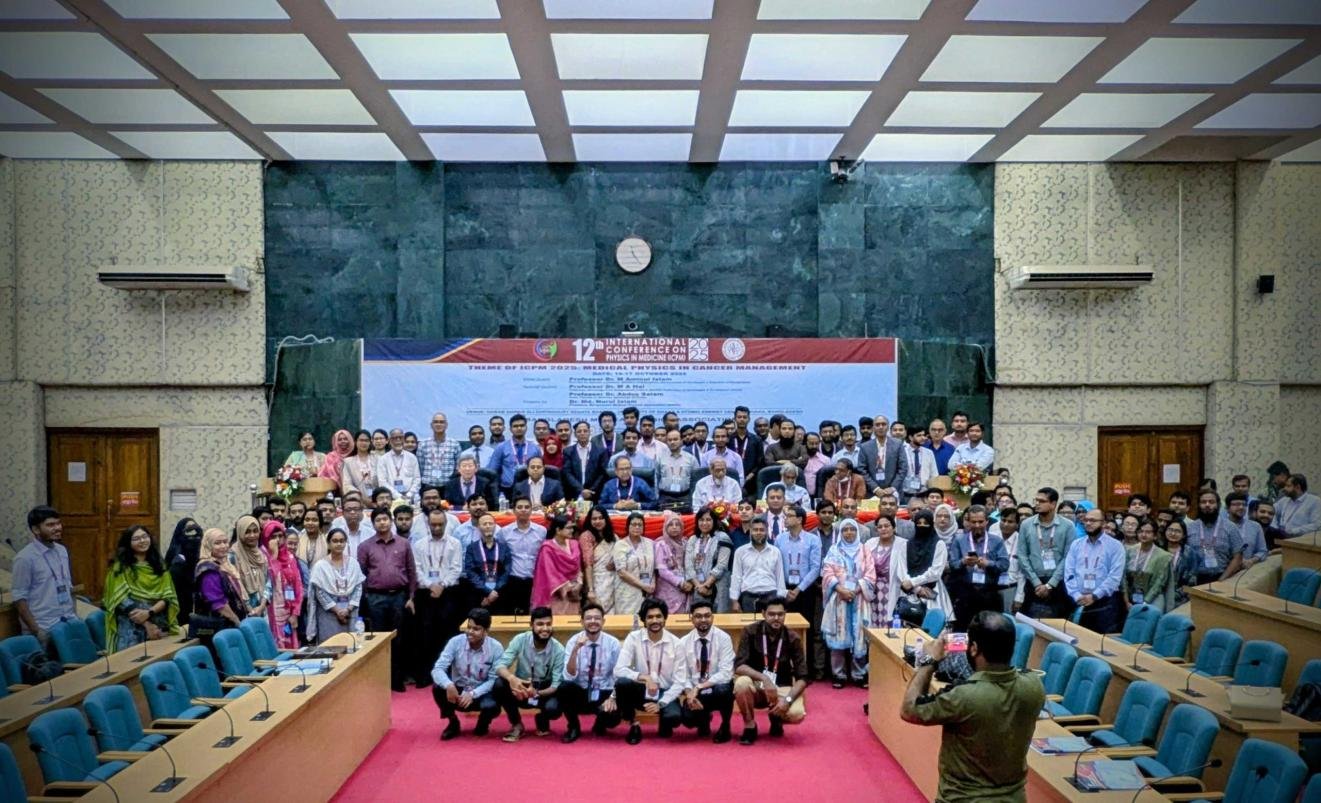
- 12th International Conference on Physics in Medicine (ICPM-2025), co-organised with the Bangladesh Medical Physics Association (about 150 participants).
- Training: seminars on cyclotron radiopharmaceutical production and lung impedance spectroscopy, and a thesis-writing workshop covering plagiarism, predatory journals and responsible use of AI in research.
Partners & Funding
- International Science Programme (ISP), Uppsala University, Sweden: supporting several research activities since 2010 (BAN:04)
- Department of Biomedical Physics and Technology, University of Dhaka: host department, research infrastructure and equipment
- Bangladesh Medical Physics Association (BMPA) and Atomic Energy Centre, Dhaka
- Ministry of Science and Technology, Bangladesh
- Short-term research funds from various government departments, international bodies and private groups
- BiBeat Ltd.: spin-off company delivering research outcomes to people
Join Us
We welcome PhD, MPhil and MS students who want to do their thesis research in the lab, and research collaborators in biomedical physics, medical devices and AI for health. We especially encourage women researchers to apply. See Admission for programme details, or contact the Lab Leader at kadir@du.ac.bd.